
Dunham: “The data is clear: private equity provides consistent and reliable long-term returns for investors while safeguarding financial stability for millions of Americans.”

WASHINGTON, D.C. – Today, the American Investment Council released a new report with data from PitchBook highlighting the superior performance of private equity investments over the long term.
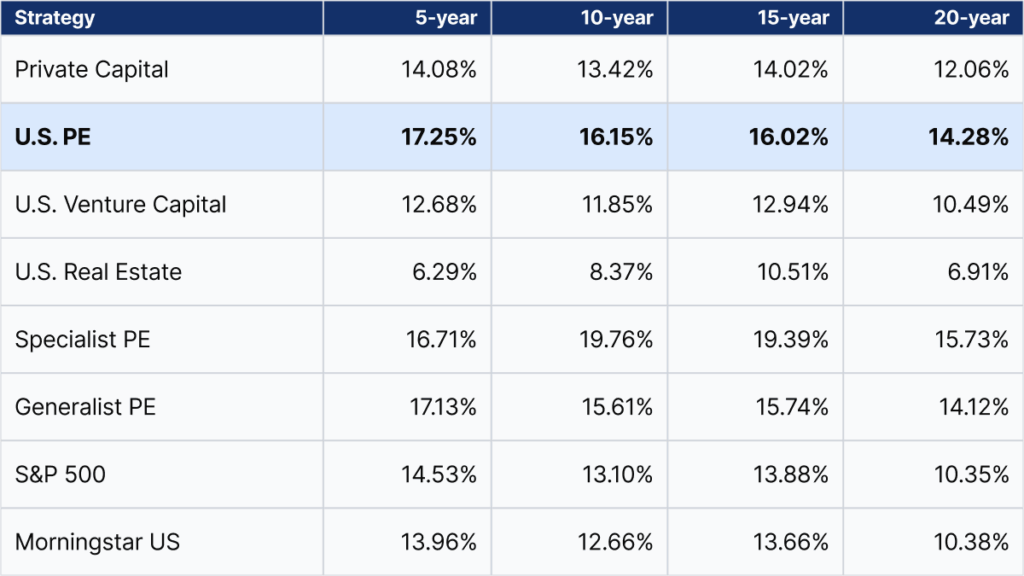
The report finds that while public markets and some asset classes may outperform private equity in the short term, private equity has delivered stronger returns compared to public markets and other asset classes over 5-, 10-, 15-, and 20-year time horizons, even when accounting for fees. The report also examines fundraising and exit trends, and analyzes how both individual savers, particularly through expanded access to 401(k) plans, could benefit by incorporating private equity into their investment strategies.
“The data is clear: private equity provides consistent and reliable long-term returns for investors while safeguarding financial stability for millions of Americans,” said AIC President and CEO Will Dunham. “As policymakers consider how to expand access to private investments for millions of savers with a 401(k), AIC is proud to share this report showing why private equity has become one of the most reliable tools for investors seeking consistent performance and diversification.”
Returns By Asset Class:
Key Takeaways from the Report:
- Generating Robust Long-Term Returns: Private equity has historically generated higher returns than public markets and other asset classes, even when accounting for fees. The report shows that U.S. private equity generated the highest returns of any asset class over 5-, 10-, 15-, and 20-year time horizons. Specialist private equity, which has a predominant focus on a single sector or industry, delivered even higher long-term returns.
- Providing a Critical Source of Diversification: Private equity has been a critical source of diversification, offering investors exposure to companies and industries not available in public markets. The number of publicly traded U.S. companies fell from 8,800 in 1997 to 3,952 in 2024. The “Magnificent 7” stocks alone accounted for over half of the S&P 500’s gains in 2024, underscoring the increasing concentration in public markets. Private firms account for 87% of all U.S. companies today, up from 62% in 2002, indicating that most growth is occurring outside public markets.
- Benefits for Savers through Expanded Access to Private Equity Investments: For decades, public pension funds have invested in private assets because they deliver strong returns over the long term and are a smart, safe way to diversify retirement savings. Expanding access to private markets in 401(k) plans is a great step that will help all Americans enjoy the same benefits of stronger returns and a secure retirement.
To learn more about how private equity outperforms all other asset classes over the long term, read the full report.